Flooded meter box
Water around the meter often means a failed fitting, valve, or service connection.

Flooded meter box? Soggy spot in the yard? Ceiling bubble or a water bill that suddenly doubled? Earl's Plumbing finds the leak, fixes the damaged section, and tells you honestly whether a repair will hold or the line needs replacing.
Call or text (530) 343-0330 — a real person answers calls day or night.

Mention this page when you call or text, or add "$25 web offer" when you book online.
📞 Claim by Phone 📅 Claim OnlineWater line leaks rarely announce themselves with a geyser. Usually it's something quieter, and a lot more expensive the longer it runs.
Water around the meter often means a failed fitting, valve, or service connection.
Soggy soil or water surfacing, especially when it hasn't rained, points underground.
A leak on your side of the meter runs 24 hours a day, and you pay for every gallon.
Water escaping before it reaches the house means less at every faucet.
Lines in attics and walls leak too. Bubbling paint or soft drywall is the clue.
Hissing or trickling when everything is off means water is going somewhere.
Rust and green crust at valves and transitions show joints that are close to failing.
One leak is a repair. Repeat leaks usually mean the whole line is wearing out.
Here's the quick rule: on most city systems, the water company owns the pipe on the street side of the meter, and you own everything on the house side. Cal Water, for example, says customers maintain the plumbing on their side of the meter.
Source: Cal Water — Is Cal Water responsible for plumbing leaks? Rules vary by water district.
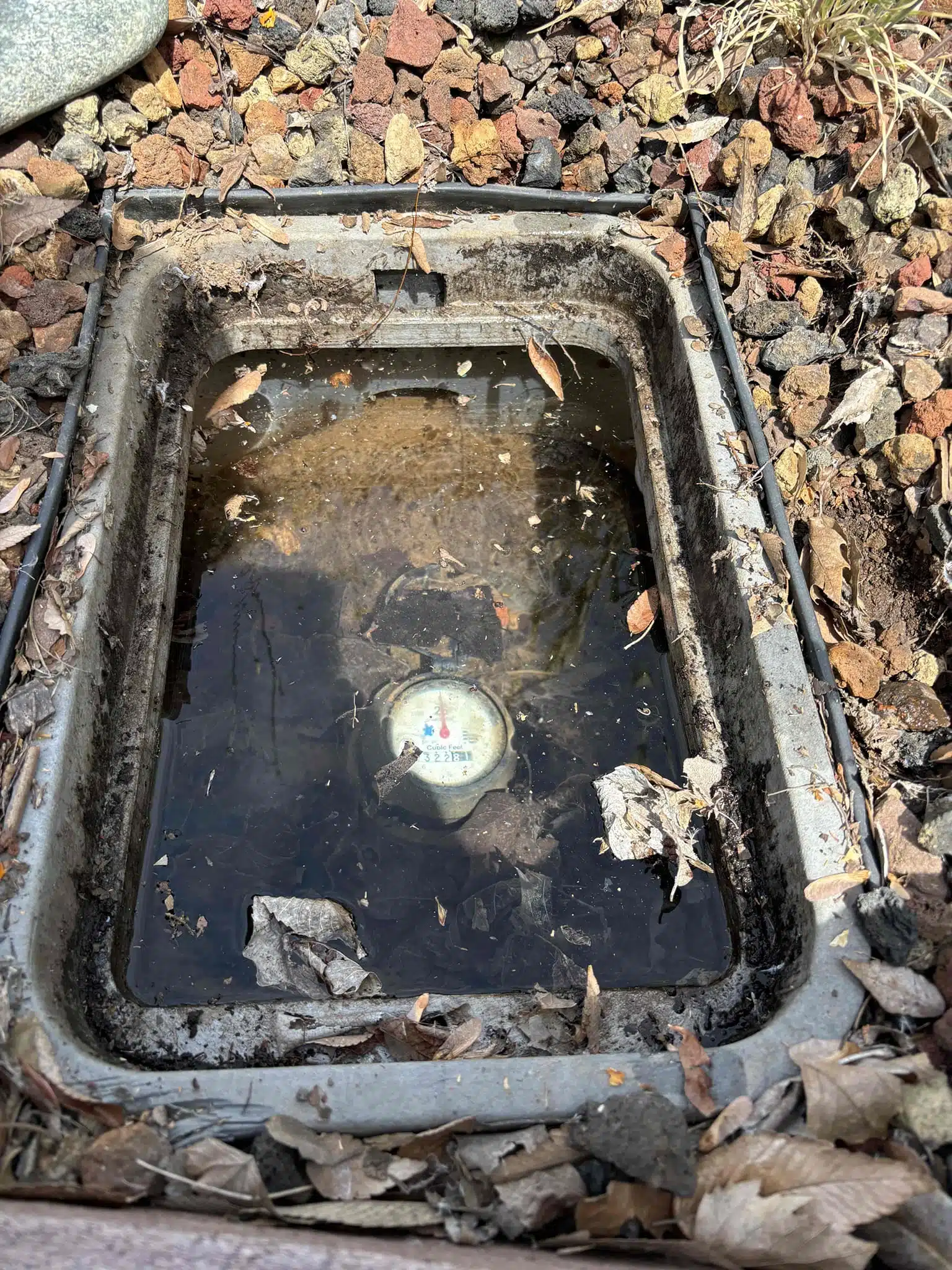
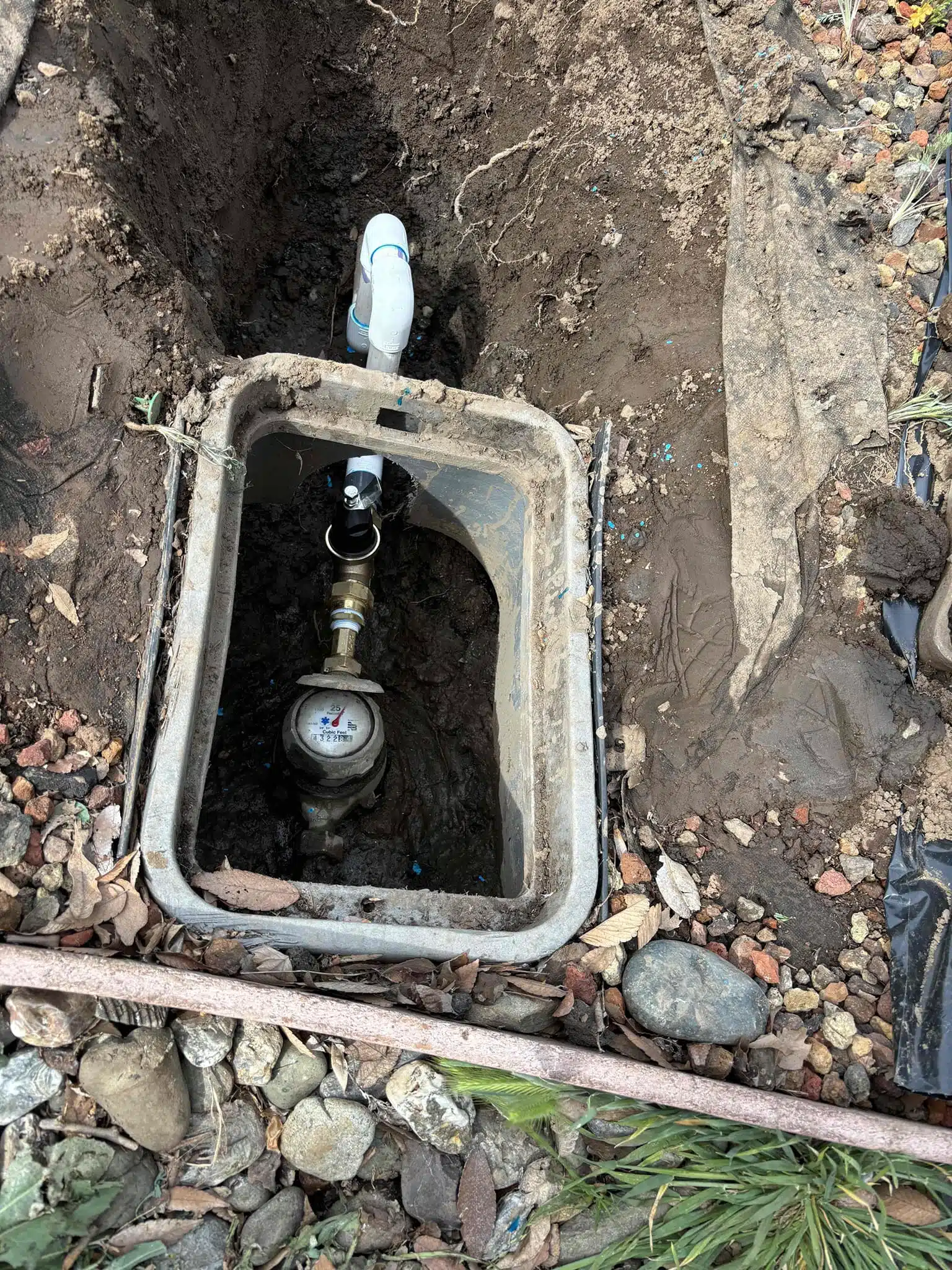
Find the failure, fix that section right, and test it before we leave.
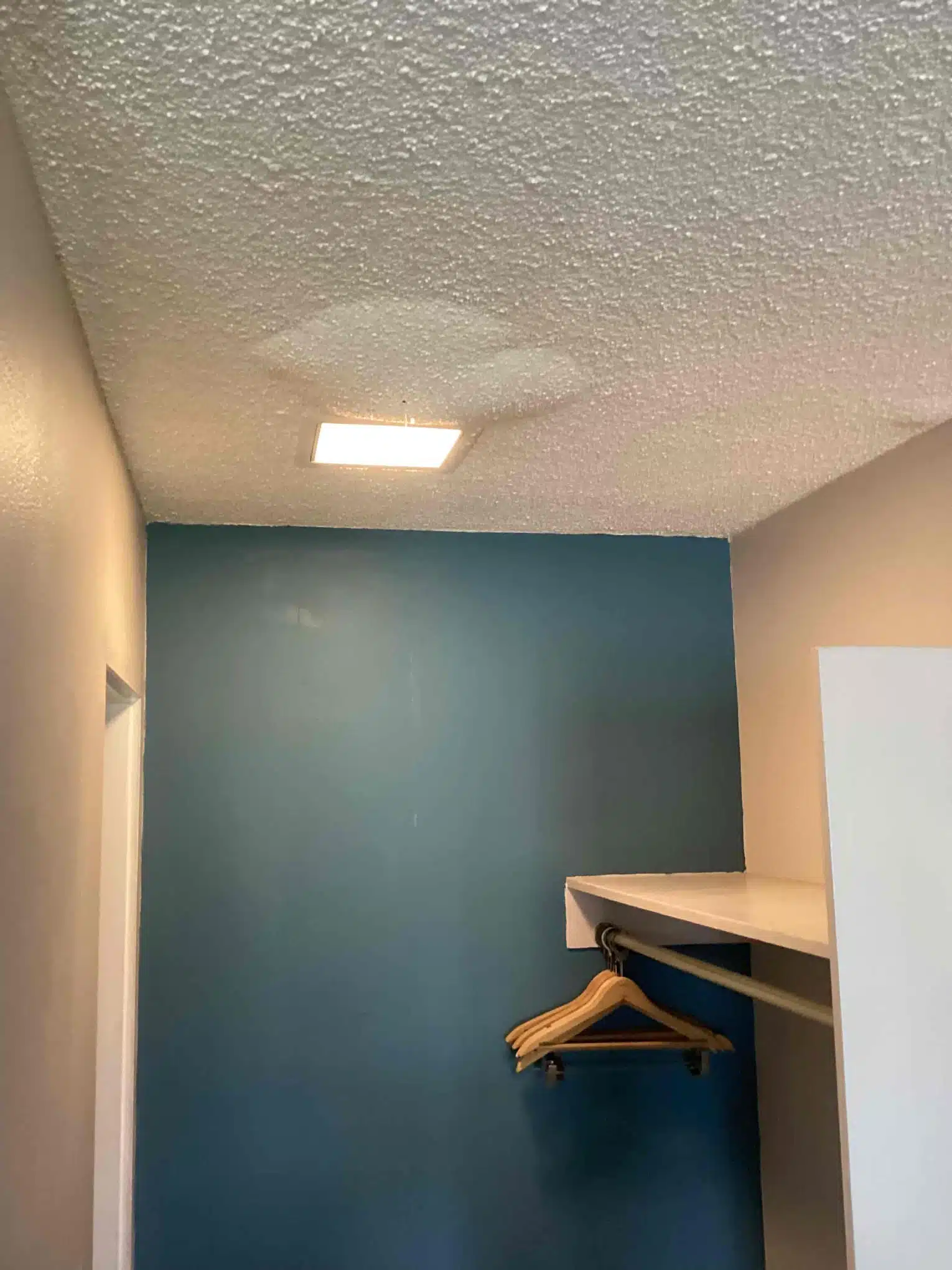
A water line in the attic broke and the ceiling showed it first. Catching it early limits the drywall damage.
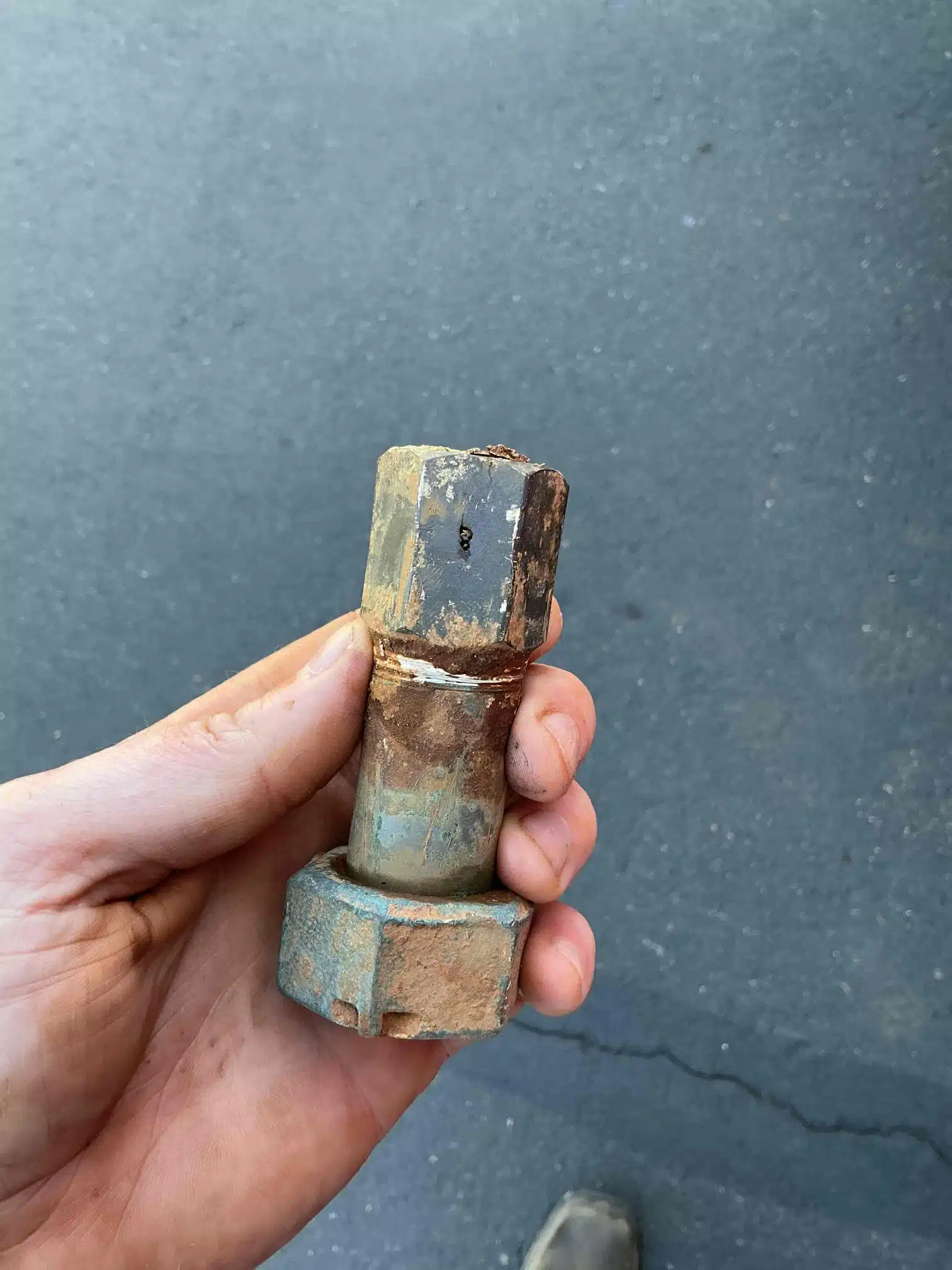
Old fittings and transitions corrode from the inside out until they let go. We replace the bad joint, not the whole house.
When the leak is in one spot, we fix that spot. No tearing up the whole yard just for sport.
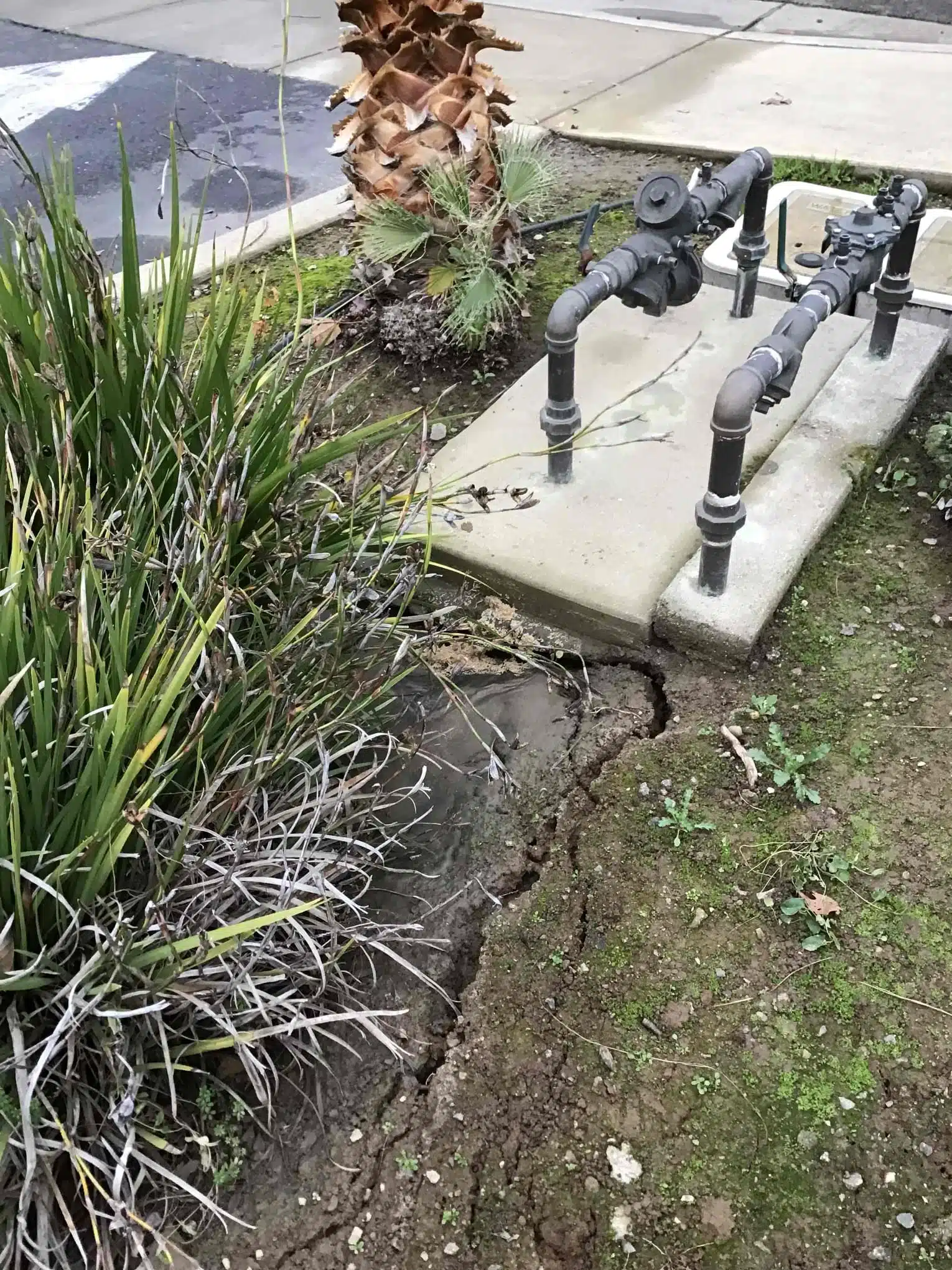
Wet soil and ground movement point the way. When the leak is hidden, leak detection pinpoints it.
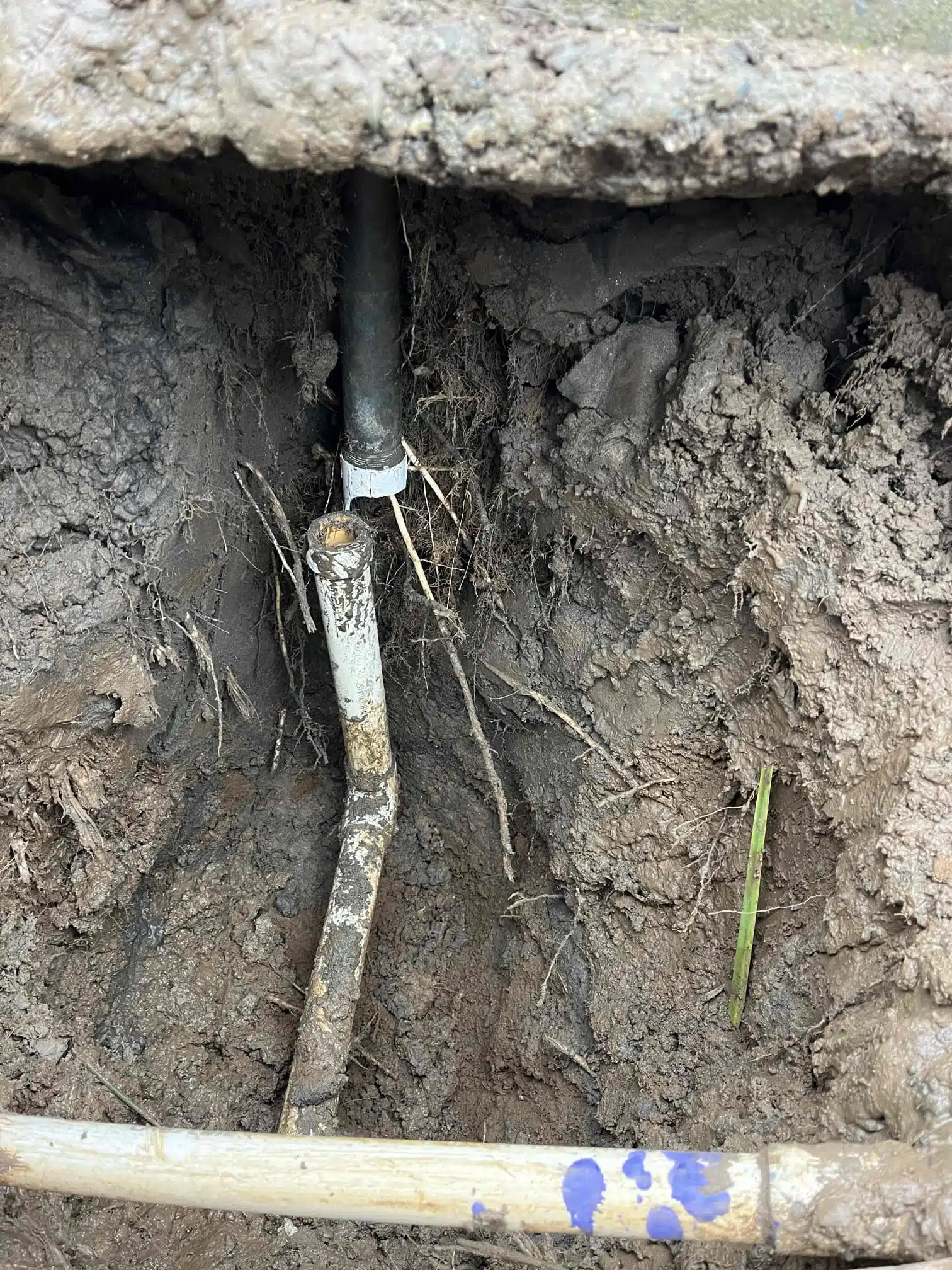
Buried utilities get marked through 811 first, then we dig only where the damage is.
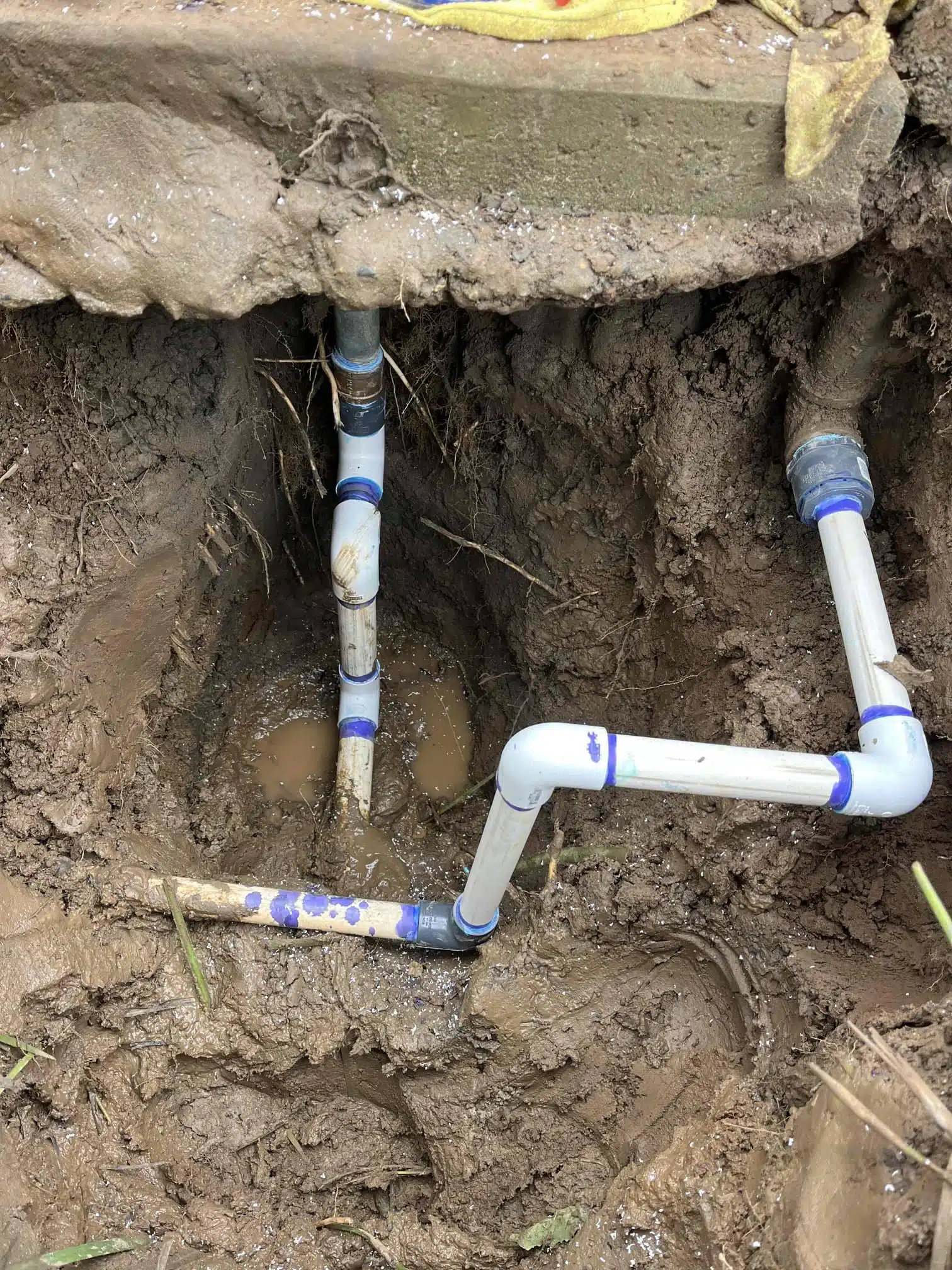
The damaged section is replaced and pressure-checked before we backfill.
California law requires calling 811 at least 2 working days before digging. Need lines marked on private property? See our line location service.
We quote both, explain the difference, and let you decide.
Not a guess, a backhoe, and a surprise bill.
Pinpointing the leak means a smaller hole and a smaller bill.
If a spot repair fixes it, that's what we recommend.
Every repair is pressure-checked and inspected for leaks.
Free quote at your door. You decide, no pressure.
Calls answered 24/7. Active leaks get priority.
Ask about an automatic shutoff valve that stops the water when it senses a leak.
Simple, clear, and no surprises.
Tell us what you're seeing and when works for you. Mention the $25 offer.
Meter check, visual inspection, and leak detection if it's hidden.
Repair vs. replace, with a firm price for each. You choose.
We repair the section, test it, and clean up.
Most people find out about a water line leak the hard way: a water bill that makes them do a double take, or a soggy patch of lawn in the middle of August. By then it's been running for a while, and you've been paying for every drop.
Here's my advice: the minute something looks off, check your meter. If it's moving with everything turned off, call us. Most of the time it's one bad spot we can fix without tearing up your whole yard. If the line is truly worn out, we'll tell you straight and show you why.
— Clinton EarlOwner, Earl's Plumbing · Your Friend in the Business
Three local offices covering eight Northern California counties. Every line takes calls and texts.
Redding · Anderson · Cottonwood · Shasta Lake · Palo Cedro · Red Bluff · Corning
Book in about a minute, right here on the page. Mention "$25 web offer" in your notes and we'll apply it.
Rather talk to a person? Call or text (530) 343-0330 — we answer 24/7.
Water spraying or flooding? Don't book online — shut off the main valve and call (530) 343-0330.
Whose leak is it, repair or replace, and what to do right now. Straight answers here.
If water is spraying or flooding, shut off the main water valve right away, usually where the line enters the house or at the meter box, and keep water away from electrical outlets. Then call a plumber. If it is a slow leak, note when it started and check the meter. Earl's Plumbing answers calls 24/7.
Common signs are a flooded meter box, a wet or soft spot in the yard, a sudden jump in the water bill, low water pressure, ceiling bubbles or wall stains, and running water sounds when nothing is on. To check, turn off every fixture and watch the meter. If it still moves, water is going somewhere.
On most city water systems, the water company is responsible for the pipe on the street side of the meter and the homeowner is responsible for everything on the house side. Cal Water, for example, says customers maintain the plumbing on their side of the meter. If the leak is before the meter, call your water company first.
Repair makes sense when the leak is isolated, such as one failed fitting, a damaged section, or a meter box connection, and the rest of the line is in good shape. Replacement is usually the better value when the line has leaked more than once, is old galvanized or failing pipe, or is too small for the home.
Yes, if the damage is in one spot. Earl's Plumbing locates the leak, makes sure buried utilities are marked through 811 before digging, exposes the damaged section, and repairs only that part of the line. We test the repair before backfilling. If the line is failing in several places, we will tell you replacement makes more sense.
Yes. A leak on your side of the meter runs around the clock, so a broken service line can raise the water bill quickly, even when you have not changed how you use water. If your bill jumps for no reason, turn off all fixtures and check whether the meter is still moving. If it is, call for a leak check.
Only if the leak is hidden. A flooded meter box or a visible wet spot often points straight to the problem. If the meter shows a leak but there is no obvious water, the leak may be under a slab, inside a wall, or underground, and electronic leak detection finds it before anyone starts digging or opening walls.
It depends on where the leak is, how deep, what pipe you have, and what has to be dug up or opened. That's why we don't charge a service call fee. We come out, find the problem, and give you a free quote before any work starts. You'll know the price first, and online customers get $25 off.