Heats Water On Demand
Tankless systems fire when hot water is needed instead of keeping a full tank hot throughout the day.

Earl's Plumbing installs propane and natural gas tankless water heaters throughout Northern California. We handle tank-to-tankless conversions, gas line and venting checks, water quality planning, and free in-home quotes with no service call fee.
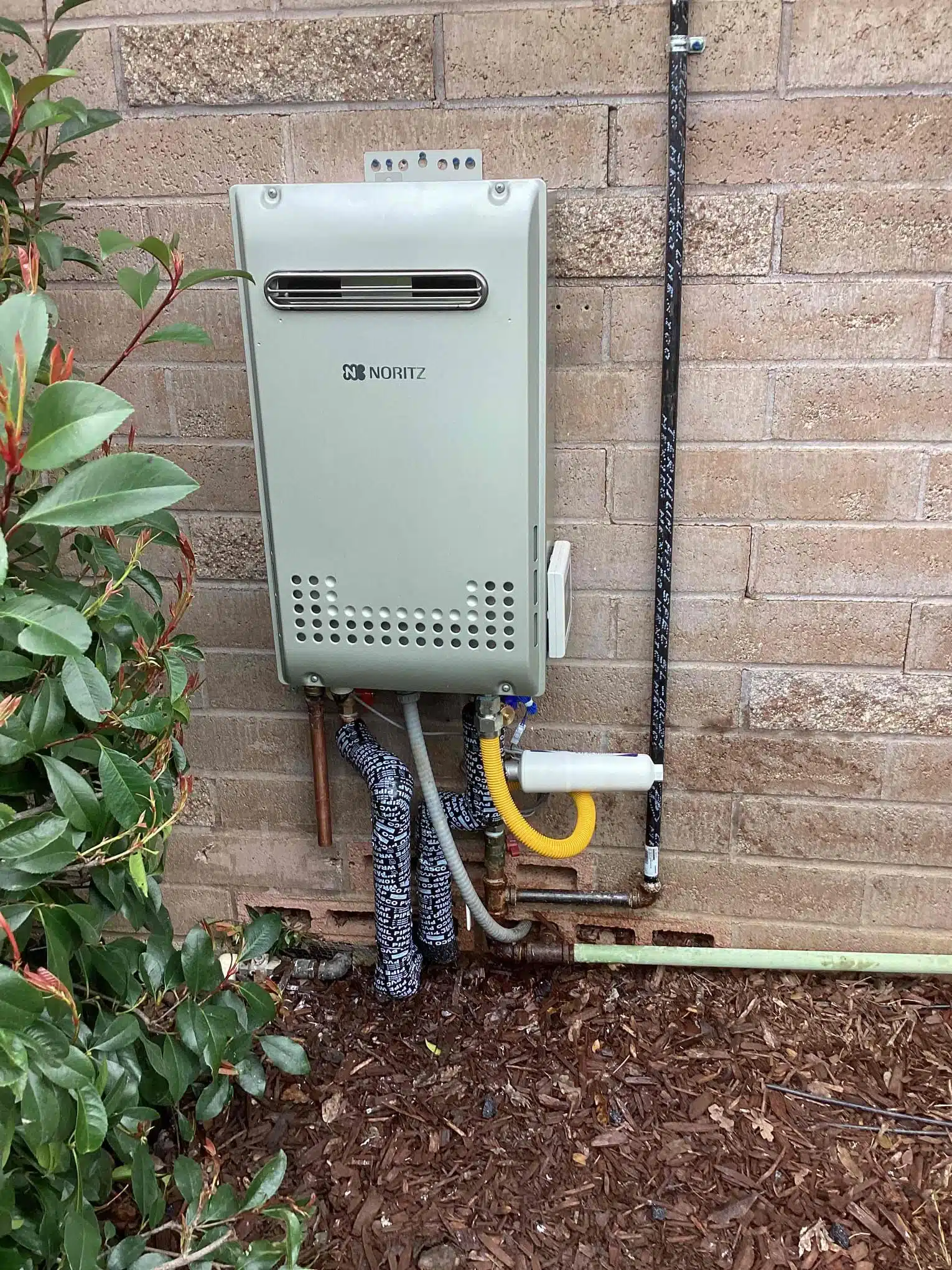
Tankless water heaters are not just about continuous hot water. For many propane and natural gas homes, they are about reducing standby fuel waste, saving space, and installing a system that fits how the home actually uses hot water.
Tankless systems fire when hot water is needed instead of keeping a full tank hot throughout the day.
When sized correctly, tankless units can keep hot water flowing for long showers and back-to-back use.
No bulky storage tank. Many units mount on a wall and free up space in garages, closets, or utility areas.
Gas line sizing, venting, clearances, water quality, and household demand all matter before installation.
The U.S. Department of Energy says demand water heaters can be 24% to 34% more energy efficient in homes using 41 gallons or less of hot water daily. DOE source
For homes using around 86 gallons of hot water per day, DOE says demand water heaters can be 8% to 14% more energy efficient than storage tank heaters. DOE source
DOE says most tankless water heaters have a life expectancy of more than 20 years. Actual life depends on installation, maintenance, water quality, and usage. DOE source
Tankless can be a great upgrade, but the right answer depends on fuel supply, hot water demand, installation location, and long-term plans for the home.
Propane tankless systems can be a strong fit for rural homes where stored hot water wastes fuel all day.
Gas tankless units can support whole-home hot water when the unit and gas line are sized correctly.
Most tank water heaters can be replaced with tankless, but it is not always a simple swap.
Hard or moderately hard water can create scale inside the heat exchanger if the system is not protected and maintained.
Fuel type changes the installation plan. Earl's Plumbing checks the setup before recommending a unit or quoting the work.
Rural Northern California has a lot of propane-fed homes. A propane tankless water heater only burns fuel when hot water is being used, instead of keeping a storage tank hot all day.
Before recommending a system, we look at regulator capacity, gas line size, venting path, unit location, total appliance load, and household hot water demand.
If your home already has natural gas, upgrading from a tank water heater to tankless can save space and reduce standby energy waste. Gas tankless units can also provide strong whole-home performance when properly sized.
We check gas line capacity, appliance load, venting, clearance, electrical access, water quality, and installation location before giving options.
We do not quote tankless installation from a guess. The home has to be checked first so the system is sized and installed correctly.
We look at the old tank, installation location, water lines, gas or propane setup, venting path, electrical access, and available space.
Showers, tubs, laundry, dishwashers, and simultaneous use all matter. Tankless systems must be sized for peak demand and incoming water temperature.
Gas line sizing, regulator capacity, venting, condensate handling, clearances, water quality protection, and service access all affect the installation plan.
You get upfront pricing before work begins. If tankless is not the best fit, we can also explain tank water heater replacement options.
Tankless water heaters are more installation-sensitive than a basic tank replacement. The details behind the wall and around the unit decide how well the system performs.
Tankless systems often need higher BTU capacity than a standard tank heater. The gas line and appliance load need to be checked.
Indoor units may need special venting. Outdoor units still need proper placement, clearances, and weather-appropriate installation.
Hard or moderately hard water can scale a heat exchanger. Softening, filtration, or routine flushing may be recommended.
Proper valves and access make future flushing and maintenance easier and cleaner.
Gas tankless systems still need electrical power for controls, ignition, and freeze protection on many units.
Condensing tankless units may need a proper condensate drain and neutralization depending on the setup.
Placement affects venting, freezing protection, access, aesthetics, and installation cost.
Permit requirements vary by jurisdiction. We install according to local code and manufacturer requirements.
Real customer before and after photos from a tank-to-tankless upgrade completed by Earl's Plumbing.

The existing storage tank took up space and needed to be evaluated before converting to tankless.
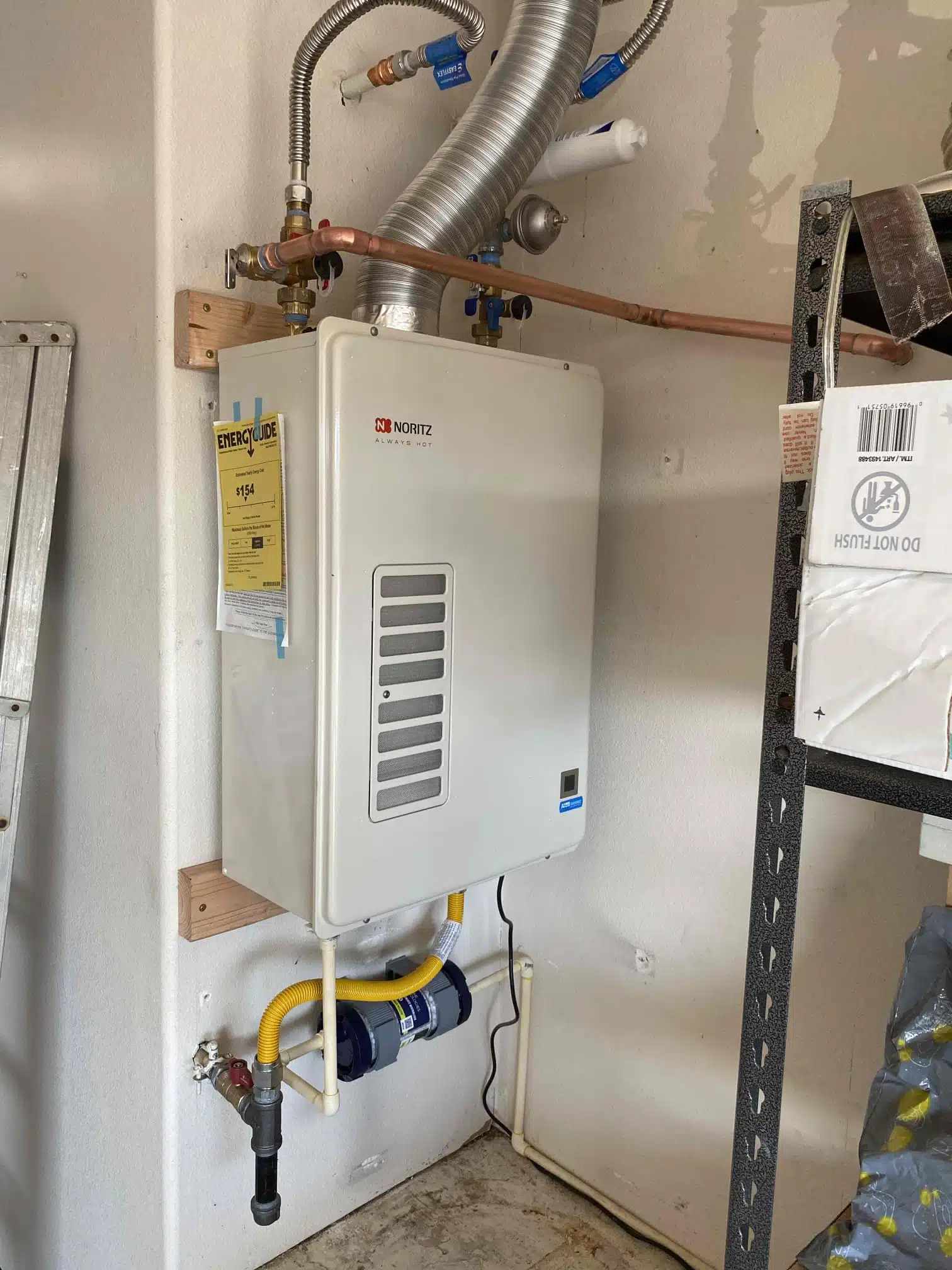
The completed tankless installation frees up space and includes the piping and service access needed for the system.
We do not give fake ballparks for tankless installation because the real price depends on the home. These are the items we inspect during your free quote.
Propane and natural gas systems have different setup requirements, regulator needs, and appliance-load considerations.
The gas line, regulator, and total appliance load must support the tankless unit safely and consistently.
Indoor tankless units often need special venting. Outdoor units may reduce venting complexity but still require proper placement.
Fixture count, shower habits, tubs, laundry, and simultaneous use affect the system size and installation plan.
Tankless is a great option for many homes, but it is not automatically the best answer for every situation. A standard tank water heater may be the better value if the upfront installation work is extensive, if the household has very high simultaneous demand, if gas or venting upgrades are not practical, or if the homeowner does not want to keep up with tankless maintenance.
That is why Earl's Plumbing gives options. We can explain tankless, tank replacement, gas line needs, water quality protection, and the tradeoffs before you make a decision.
Real feedback from homeowners who called Earl's Plumbing for tankless options, estimates, and installation.
"Stefan M. from Earl's Plumbing took care of us. He came out when the hot water heater stopped working and diagnosed the problem and gave us options. Three months later he was back. To order the part was three weeks out, but I have three girls in the house and we needed hot water today. We bit the bullet and upgraded our system to a tankless option. This was decided at 2pm and Stefan stayed late until my girls had hot water. The system works great and the install looks professional and clean."
"Travis came out to give us an estimate to swap our water heater to tankless. He was incredibly thorough, polite, professional, and answered all of our questions. This was my first exposure to Earls and we'll definitely be calling if we need something else. Thank you!"
Tankless installation connects naturally with water heater replacement, gas line work, water quality protection, and whole-home plumbing upgrades.
We install propane and natural gas tankless water heaters across our Northern California service area.
Pick a time that works for you. No service call fee. We inspect your setup and give you options.
No hot water? Call (530) 343-0330 directly for faster scheduling.
Real questions homeowners ask before upgrading from a tank water heater to tankless.
Yes. Tankless water heaters can be a strong option for propane homes because they heat water only when hot water is being used instead of keeping a storage tank hot all day. Earl's Plumbing evaluates propane supply, gas line sizing, regulator capacity, venting, water quality, and household demand before recommending a system.
It can, depending on the home. The U.S. Department of Energy says demand water heaters can be 24% to 34% more energy efficient than storage tank water heaters for homes using 41 gallons or less of hot water daily, and 8% to 14% more efficient for higher-use homes around 86 gallons per day. Actual savings depend on hot water use, fuel type, equipment, installation, and maintenance.
Usually, yes. Replacing a tank water heater with a tankless system may require gas line changes, venting, condensate drainage, electrical access, service valves, and permit-compliant installation. Earl's Plumbing provides a free in-home quote before any work begins.
Tankless sizing depends on peak hot water demand, flow rate, temperature rise, fuel type, incoming water temperature, and how many fixtures may run at once. Earl's Plumbing checks the home before recommending a tankless system.
A properly sized tankless water heater can provide continuous hot water because it heats water on demand rather than storing a limited tank. However, an undersized system can struggle when too many showers, faucets, or appliances run at the same time.
Yes. Tankless systems need regular maintenance, and flushing or descaling may be recommended depending on water hardness, usage, and manufacturer requirements. Noritz describes flushing or de-scaling as part of regular tankless maintenance. See Noritz maintenance info.
Hard or moderately hard water can create mineral scale inside a tankless heat exchanger. Scale buildup can reduce hot water flow, lower performance, trigger error codes, and increase maintenance needs. A water softener, scale-reduction system, or regular flushing may be recommended depending on the home.
Tankless may not be the best fit when the upfront cost does not make sense, gas or propane upgrades would be extensive, the household has very high simultaneous hot water demand, or the homeowner does not want to keep up with maintenance. We can explain tank and tankless options before you decide.
Permit requirements depend on the local city or county building department, but water heater installations and replacements commonly require permits and must meet local plumbing, mechanical, venting, gas, seismic, and safety requirements. Earl's Plumbing installs tankless systems according to local code and manufacturer requirements.
Tankless installation cost depends on the unit, fuel type, venting, gas line sizing, installation location, condensate handling, water quality protection, and whether the home is converting from a tank system. Earl's Plumbing provides free in-home quotes with no service call fee.